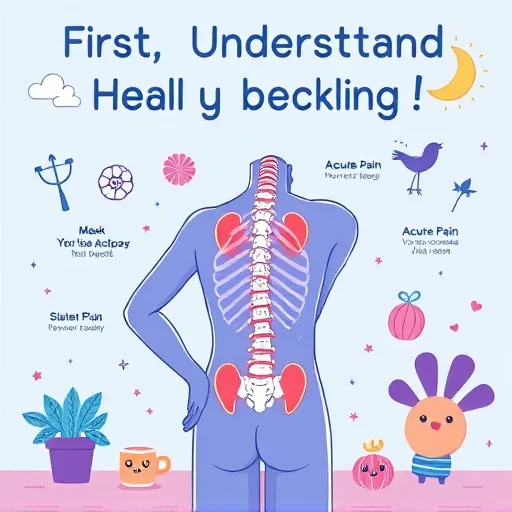
Acute versus chronic
First, Understand What You're Dealing With
Before you start slapping on heat packs or launching into a stretching routine, it really pays to figure out what kind of back pain you're actually dealing with. Generally speaking, back pain falls into two big buckets: acute pain and chronic pain. Acute pain shows up out of nowhere and usually clears up within a few weeks. Chronic pain hangs around way longer and often needs a more structured game plan. Knowing the difference is step one when you're figuring out how to relieve back pain fast at home.
Most everyday back pain—the kind that hits after you lift something awkwardly or sit at your desk way too long—is mechanical in nature. That means it's tied to your muscles, ligaments, joints, or spinal discs rather than something more serious. According to musculoskeletal health professionals, the majority of acute episodes respond really well to self-care strategies when you apply them early and consistently. That's actually great news if you're wondering how to relieve back pain fast at home—the odds are seriously in your favor.
That said, there are red flags you should never brush off. If you notice numbness in the groin area, loss of bladder or bowel control, unexplained weight loss alongside your back pain, or pain that follows a significant trauma, get medical attention immediately—don't try how to relieve back pain fast at home on your own in those situations. For everything else, the at-home strategies below can be remarkably effective.
Immediate Relief Strategies: Temperature Therapy With Ice Packs and Heating Pads
One of the fastest ways to calm an angry back is temperature therapy. During the first 48 hours after an injury or sudden flare-up, cold therapy is your best friend. Applying an ice pack for 15 to 20 minutes at a time helps reduce inflammation and numb the area. This is one of the simplest answers to how to relieve back pain fast at home—you probably already have ice in your freezer.
After the initial inflammatory phase, switch to heat therapy. A warm compress, a hot water bottle, or a warm bath can help relax tense muscles and improve blood flow. Many physical therapists recommend alternating between cold and heat to maximize circulation and comfort. Just remember to always wrap your ice pack or heating pad in a towel to protect your skin. If you're serious about how to relieve back pain fast at home, this alternating approach is a solid foundation.
Gentle Movement and Short Walks Beat Bed Rest for Muscle Stiffness
Here's something that's become increasingly clear in recent years: prolonged bed rest is actually counterproductive for most types of back pain. While it's tempting to lie down and wait for the pain to pass, staying immobile for too long can stiffen muscles and slow recovery.
Instead, aim for gentle, controlled movement. Short walks around your home, slow stretching, and light daily activities are far better than lying flat for days. A senior practitioner in sports medicine once told me that the phrase "rest is best" has done more harm to backs than almost any other piece of advice. The key is to move within your comfort zone—no heroics, just gentle motion. That's a huge part of how to relieve back pain fast at home without making things worse.
Over-the-Counter Pain Relief and Topical Creams for Fast Comfort
For fast relief, over-the-counter anti-inflammatory medications can help take the edge off. These are widely available and can be useful in the short term to help you stay mobile. Always follow the label instructions and consult a healthcare provider if you have any underlying conditions or are taking other medications.
Topical creams and gels containing menthol or capsaicin are another option. They work locally to create a soothing sensation that distracts from deeper pain. Many people find them particularly helpful for lower back discomfort. If you're mapping out how to relieve back pain fast at home, keeping a topical gel in your medicine cabinet is a smart move.
Safe Stretches: Knee-to-Chest, Cat-Cow, and Child's Pose for Mobility
Once the sharpest pain has subsided, gentle stretching can help restore mobility. Here are a few low-risk stretches that are widely recommended for how to relieve back pain fast at home:
- Knee-to-chest stretch: Lie on your back and gently pull one knee toward your chest, holding for 15 to 30 seconds. Switch sides.
- Cat-cow stretch: On your hands and knees, alternate between arching your back and rounding it. Move slowly and breathe deeply.
- Child's pose: Kneel and sit back on your heels, then fold forward with your arms extended. This gently decompresses the lower spine.
- Pelvic tilts: Lie on your back with knees bent and gently rock your pelvis to flatten your lower back against the floor.
Stop immediately if any stretch causes sharp or radiating pain. Discomfort is normal; pain that shoots down your leg is not. Being smart about stretching is essential when you're learning how to relieve back pain fast at home.
Ergonomic Home Setup: Supportive Mattresses and Lumbar Support
If you're spending more time resting at home, make sure your setup isn't working against you. A supportive mattress matters more than most people realize. Medium-firm mattresses tend to work well for most back pain sufferers, but personal preference plays a big role.
When sitting, choose a chair with good lumbar support. You can roll up a towel or use a small cushion behind your lower back to maintain its natural curve. Avoid slouching on soft sofas for extended periods—they may feel comfortable in the moment but often make pain worse over time. Nailing your ergonomics is a low-effort way to tackle how to relieve back pain fast at home.
Posture Awareness During Everyday Tasks and Micro-Breaks
Even simple activities like doing dishes, folding laundry, or working on a laptop can strain your back if your posture is off. Keep your feet flat on the floor, your shoulders relaxed, and your screen at eye level. If you're working from home, take frequent breaks to stand, stretch, and walk around.
A seasoned practitioner I spoke with recently emphasized that micro-breaks—just 60 seconds of movement every 30 minutes—can dramatically reduce the cumulative strain on your spine throughout the day. Pair that with good posture, and you've got a practical answer to how to relieve back pain fast at home without any fancy equipment.
Breathing Exercises and Progressive Muscle Relaxation for Pain Modulation
Deep, diaphragmatic breathing isn't just for meditation enthusiasts. It activates the parasympathetic nervous system, which helps reduce muscle tension and can actually modulate pain perception. Try this: lie on your back with one hand on your belly, inhale slowly through your nose for a count of four, hold for four, and exhale through your mouth for a count of six. Repeat for five minutes. It's a surprisingly effective tool for how to relieve back pain fast at home.
Progressive muscle relaxation involves systematically tensing and then releasing different muscle groups. Start with your toes and work your way up to your shoulders and jaw. It's particularly useful for people whose back pain is exacerbated by stress and muscle guarding—a common pattern where the body unconsciously tightens around an area of pain.
Sleep Positions and Supportive Pillows for Lower Spine Alignment
You spend roughly a third of your life sleeping, so your sleep position matters. Here's what generally works best:
- On your back: Place a pillow under your knees to reduce pressure on your lower spine.
- On your side: Put a pillow between your knees to keep your hips aligned. Use a pillow that keeps your neck in a neutral position.
- On your stomach: This is generally the least back-friendly position, but if you must, place a thin pillow under your pelvis and lower abdomen.
If you wake up stiff and sore every morning, your sleeping setup might be the culprit. Consider whether your pillow is too high, too low, or too worn out to provide adequate support. Getting your sleep position right is an often-overlooked piece of how to relieve back pain fast at home.
Core Strengthening and Low-Impact Cardio for Long-Term Back Health
Once the acute phase has passed, building strength and flexibility is the best investment you can make in your back health. Research consistently shows that targeted exercise is one of the most effective interventions for preventing recurring back pain.
Your core muscles—the ones deep in your abdomen and around your spine—act like a natural corset. When they're strong, they take pressure off your spine. Simple exercises like planks (modified on your knees if needed), bird-dogs, and dead bugs are excellent starting points. You really don't need fancy gear to get going. Walking, swimming, and cycling are all excellent for back health too—they improve circulation, help maintain a healthy weight, and keep your joints lubricated. Start with short sessions and gradually increase duration as your comfort allows. This is the long game of how to relieve back pain fast at home—and keep it away.
Prevention Habits: Healthy Weight, Proper Lifting, and Hydration
Here's the thing about back pain—it tends to recur if you don't address the underlying causes. Some of the most impactful preventive habits include maintaining a healthy weight (especially around the midsection, which puts extra strain on the lower back), staying active with 20 to 30 minutes of daily walking, lifting properly by bending at the knees and keeping the load close to your body, managing stress to avoid muscle tension, and staying hydrated—since spinal discs are largely made of water and proper hydration supports their function. Every one of these habits feeds into how to relieve back pain fast at home when a flare-up hits.